Guide
JRA Racing Museum at Tokyo Racecourse
The JRA Racing Museum inside Tokyo Racecourse is free, open Wednesday to Sunday most of the year, and has a jockey simulator, a G1 riding machine and the Japanese racing Hall of Fame.
By Tama Travel GuideFacts checked: 5 sources
At a glance
- Cost
- Free (racecourse entry needed on Tokyo race days)
- Open
- 10:00–17:00 race days; 10:00–16:00 other days
- Nearest station
- 7 min from Fuchu-Keiba-Seimon-mae; 10 min from Higashi-Fuchu
- Best for
- Racing fans, families, a rainy-day stop
Contents
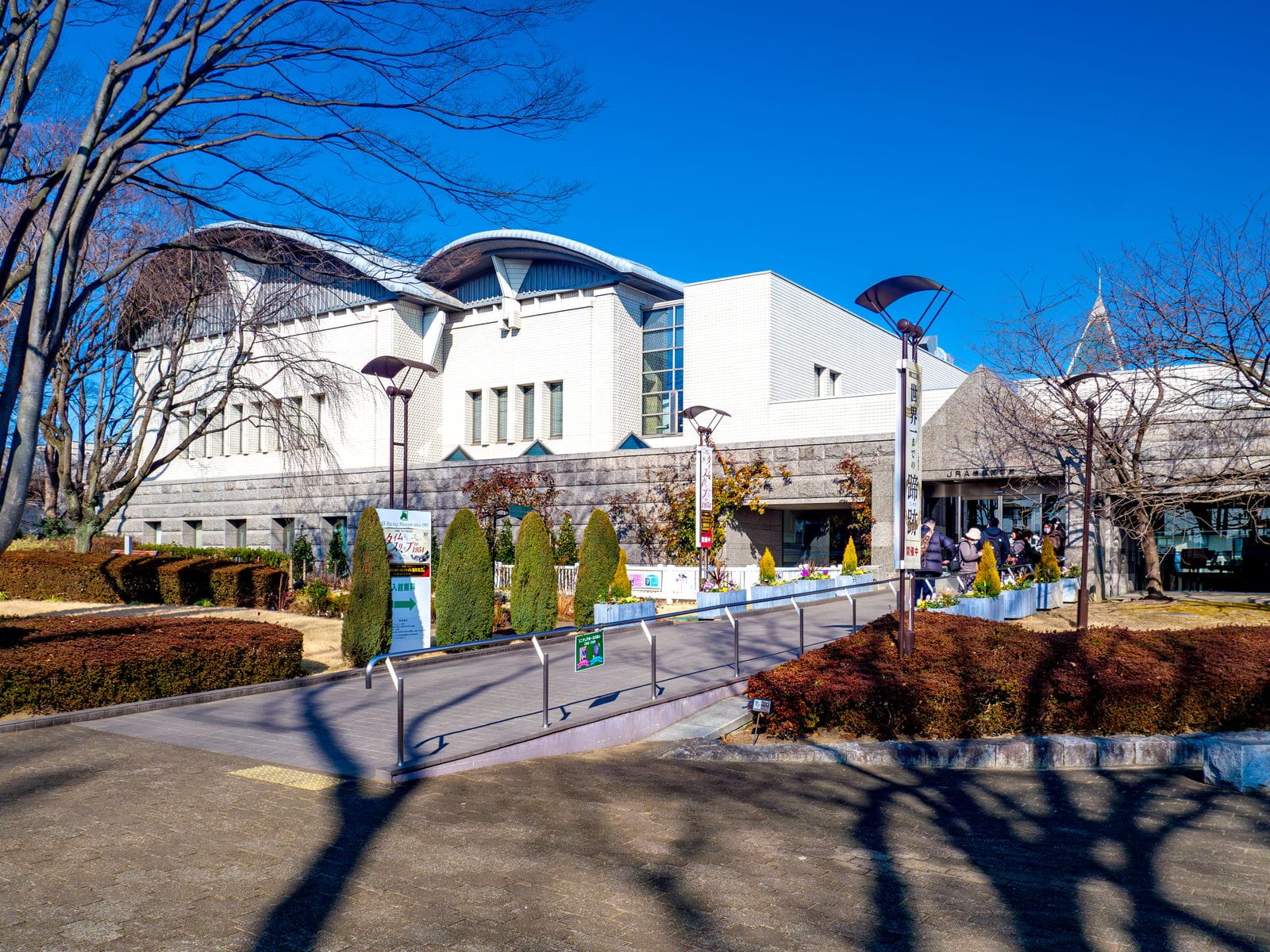
The JRA Racing Museum (JRA競馬博物館) stands inside Tokyo Racecourse, near the East Gate, and admission is free. On Tokyo race days you pay the racecourse entry (usually ¥200) to reach it. On weekdays you walk in through the East Gate. It covers horse racing history in Japan and abroad and holds the Japanese racing Hall of Fame. It also has hands-on attractions: a starting gate you can sit in, a jockey simulator for kids, and the “RIDE ON GI HORSE” riding machine, which plays real G1 race footage.
It is run by the Equine Cultural Affairs Foundation and opened on October 26, 1991.
Hours, closed days and access
From the museum’s official visitor page (as of October 2026):
| Details | |
|---|---|
| Hours | 10:00–17:00 on Tokyo race days and Park Winds (off-track betting) days; 10:00–16:00 on other days |
| Closed | March–November: Mondays and Tuesdays (open on public holidays, closed the next weekday instead). December–February: Mondays, Tuesdays and Fridays (open on public holidays). Also New Year and other temporary closures |
| Admission | Free. On Tokyo race days, the racecourse entry fee is needed |
| Weekday entry | Through the East Gate only |
| Parking | Free on weekdays and public holidays (Tokyo Racecourse Lot 1). Paid on JRA race days. The museum asks you to use public transport |
Walking times listed by the museum:
| Station | Line | On foot |
|---|---|---|
| Fuchu-Keiba-Seimon-mae (府中競馬正門前) | Keio | 7 min |
| Higashi-Fuchu (東府中) | Keio | 10 min |
| Fuchu (府中) | Keio | 18 min |
| Fuchu-Honmachi (府中本町) | JR Musashino / Nambu | 18 min |
| Koremasa (是政) | Seibu Tamagawa | 20 min |
Higashi-Fuchu is the easiest on weekdays, because the East Gate is the one that’s open. Check the museum’s 2026 calendar before you go.
What’s inside
According to the museum’s English and Japanese pages:
- Hall of Fame (競馬の殿堂). Portraits, bronze statues and records of horses and horsemen inducted by JRA. Inductees include Shinzan, Symboli Rudolf, Oguri Cap, Deep Impact, Vodka (whose bronze statue the museum shows on its English page), Almond Eye and Equinox, inducted in 2025.
- Exhibition Room 1. The history of racing in the UK, France, the US, Japan and elsewhere. It has miniature dioramas of Epsom on Derby Day 1856 and of horse racing in Japan at the end of the Edo period.
- Exhibition Room 2. How modern racing works and how racehorses are produced. It includes a real starting gate, based on the JSS30 type, where you sit on a life-size horse model as the gates open.
- Exhibition Room 3, the Gallery and the Special Exhibition Room. Changing exhibitions.
- Museum Hall (馬の学び舎). A 150-inch screen and three full-size horse models (a thoroughbred, a draft horse and a Japanese native pony) to compare.
- Garden. A promenade laid out in the shape of Epsom Racecourse.
The attractions
| Attraction | What it is | Who can use it |
|---|---|---|
| Live Theater “Thoroughbred” | Four screens and 5.1ch surround sound. Short films about thoroughbreds and the Derby | All ages |
| Narikiri Jockey (なりきりジョッキー) | Pick one of eight owners’ silks, take a photo of your face and “ride” in a race on screen. The result is down to luck | Mainly for kids |
| RIDE ON GI HORSE | A riding machine with real G1 jockey-camera footage on a 100-inch screen, or CG-VR goggles | Age 3 and up (see below) |
RIDE ON GI HORSE details (from August 5, 2026):
- Race menu: the 2024 Japan Cup (Do Deuce), 2025 Nakayama Grand Jump, 2025 Tenno Sho (Autumn), 2025 Mile Championship and 2026 Oaks on jockey camera, plus VR versions of the 2024 Japan Cup and 2025 Arima Kinen.
- Ages: under 3 can’t ride. From age 3 to preschool, gentle mode only, with a parent. Primary school children aged 9 and under can use the normal mode too, with a parent. Children 10 and over can use VR as well, with a parent.
- Hours: 10:00–16:30 on JRA race days, 10:00–15:30 on other open days. Reception may close early when busy.
- Limits: two people ride at a time, about 2–5 minutes depending on the race. Riders over 100 kg can’t use it.
Exhibitions in autumn 2026
The museum lists these (dates as published; they can change):
| Exhibition | Dates |
|---|---|
| Special: “Internationalization of Japanese Racing” (Equine Cultural Affairs Foundation 50th anniversary) | October 3, 2026 – February 23, 2027 |
| Special: 2026 Hall of Fame selection exhibition | October 3, 2026 – February 23, 2027 |
| Japanese native horses: the Kiso horse | October 3, 2026 – April 18, 2027 |
| Entrance exhibition: winner of the 46th Japan Cup | December 12, 2026 – February 23, 2027 |
Tips for your visit
- Combine it with a race day for the full experience, or come on a weekday for a quiet visit (enter by the East Gate).
- Families: the riding machine and Narikiri Jockey are popular with kids. Hiyoshigaoka Park, with its play area and fountain, is next to the East Gate. See Tokyo Racecourse with kids.
- Accessibility: accessible toilet on 1F, elevators and escalators, one wheelchair to borrow, a changing table, and a baby room at the East Gate nearby.
- Fans of famous horses: the Hall of Fame is the place to start. See also Tokyo Racecourse for Uma Musume fans.
Coming from Fuchu Station? The museum is an 18-minute walk. You can pass Okunitama Shrine on the way. See the Fuchu walk.
Prices and hours change. Check the official site before you go.