Guide
Tokyo Racecourse for First-Timers: Getting There, Entry and Where to Go
Tokyo Racecourse in Fuchu is about 22 minutes from Shinjuku by Keio. Entry is ¥200 on most race days and free under 15. How to get in, what to see, and the big-race days that need advance tickets.
By Tama Travel GuideFacts checked: 6 sources
At a glance
- Travel time
- About 22 min from Shinjuku (Keio, change at Higashi-Fuchu)
- Cost
- ¥200 cash at the gate; under 15 free
- Nearest station
- Fuchu-Keiba-Seimon-mae, 2 min to the Main Gate
- Open
- Race days 9:00–17:00 (earlier on G1 days)
Contents
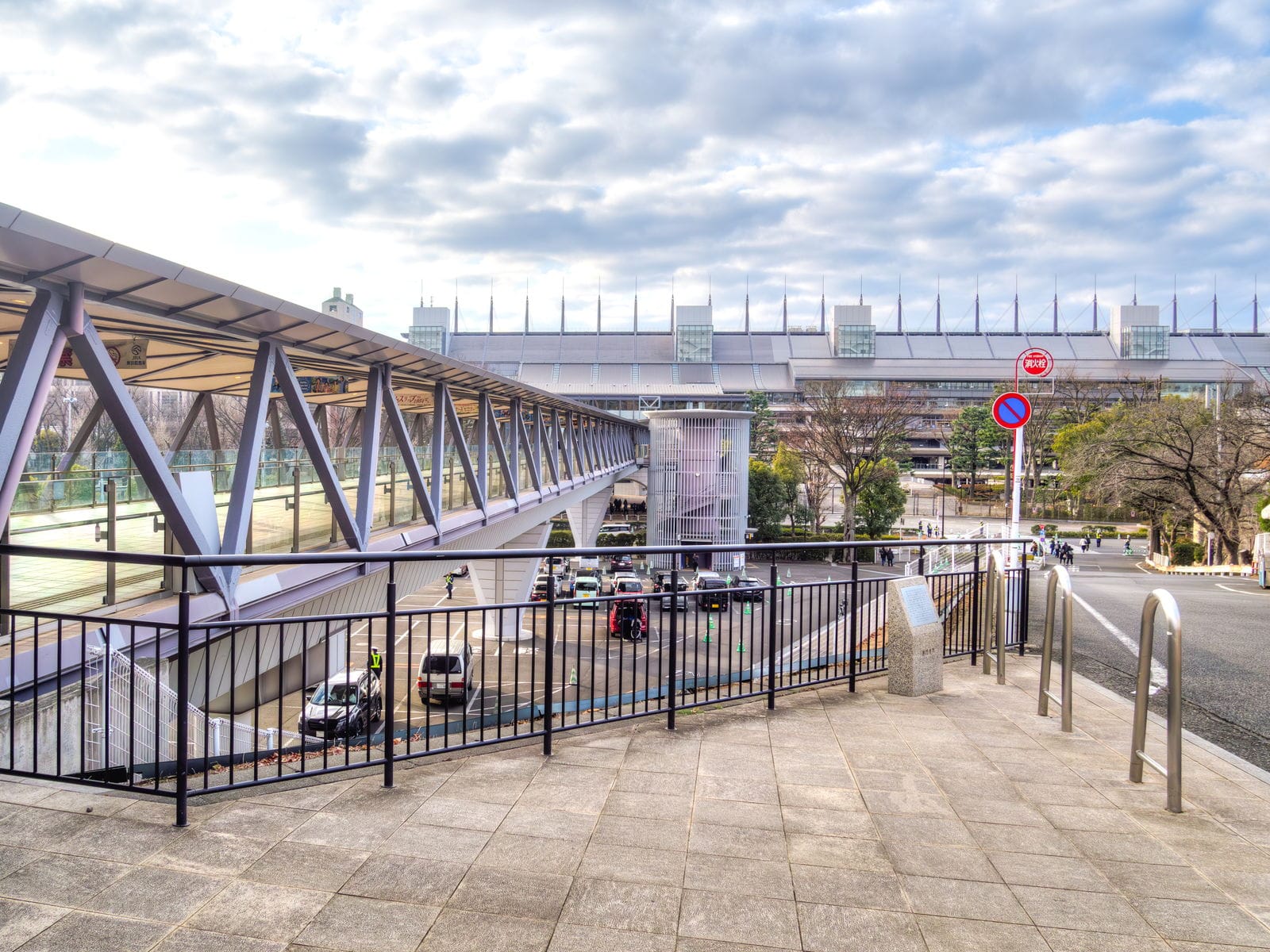
Tokyo Racecourse (東京競馬場) is in Fuchu, west Tokyo, and is easy to reach: about 22 minutes from Shinjuku on the Keio Line, then a 2-minute walk over a dedicated overpass to the Main Gate. On most race days you pay ¥200 in cash at the gate, and children under 15 get in free. The exception is the biggest race days (the Japanese Derby, Tenno Sho (Autumn) and Japan Cup), when every ticket must be booked online in advance.
You don’t have to bet to enjoy the day. The racecourse has a horse museum, a big infield playground, food courts and plenty of free seating. This page covers getting there, getting in, and a simple plan for your first visit.
Getting there
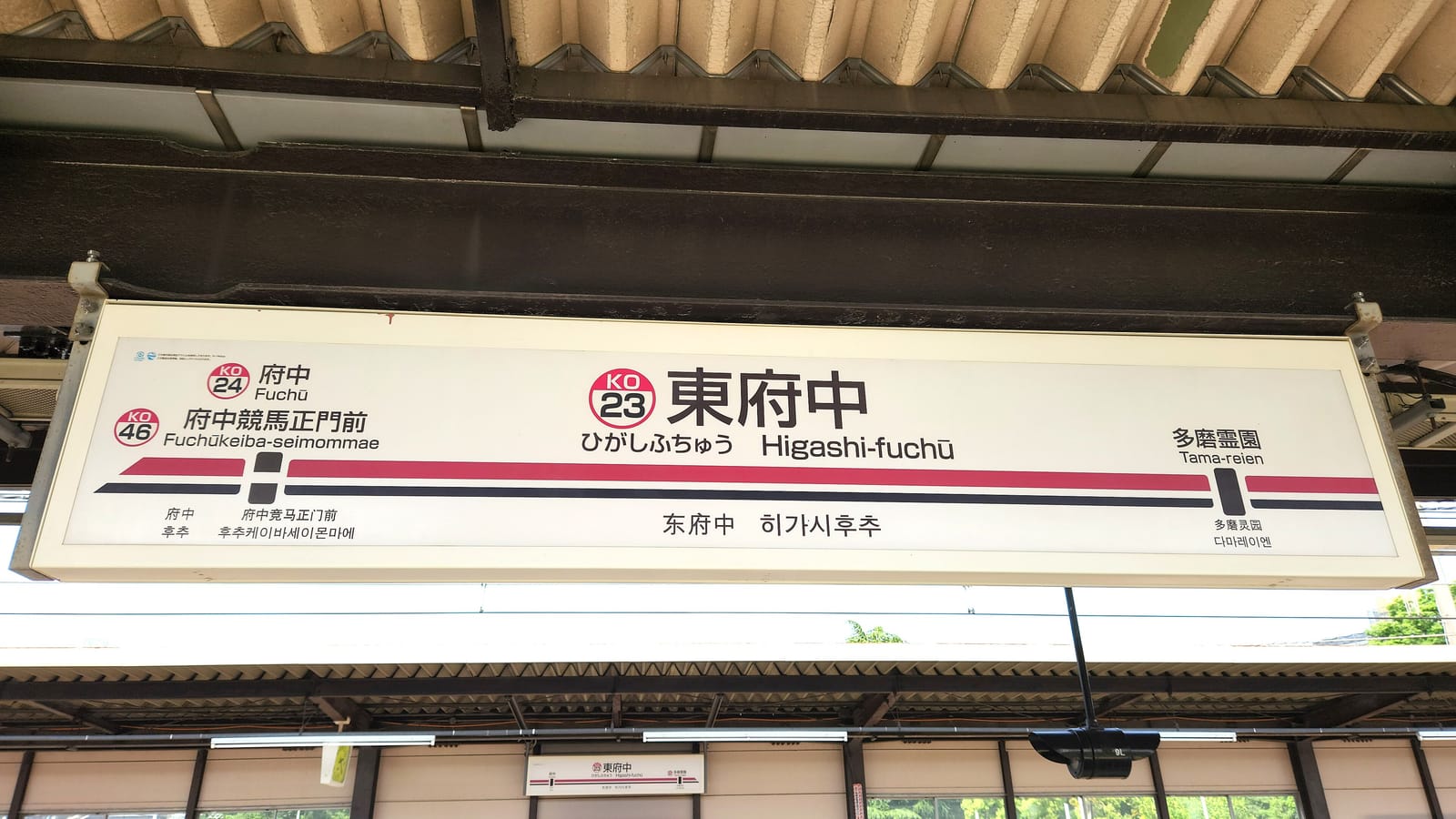

JRA lists three ways in by train (as of October 2026):
| Station | Line | Walk to | Time on foot |
|---|---|---|---|
| Fuchu-Keiba-Seimon-mae (府中競馬正門前) | Keio (Keibajo branch) | Main Gate, via a dedicated overpass | About 2 min |
| Higashi-Fuchu (東府中), South Exit | Keio | East Gate | About 10 min |
| Fuchu-Honmachi (府中本町), temporary gate | JR Musashino / Nambu | West Gate, via a dedicated overpass | About 5 min |
From Shinjuku (新宿), JRA’s English site says the trip takes about 22 minutes to Fuchu-Keiba-Seimon-mae by limited express or local limited express, changing at Higashi-Fuchu, or about 20 minutes to Higashi-Fuchu if you walk from there. Keio’s fare table puts Shinjuku to Fuchu at ¥320 (paper ticket) or ¥314 (IC card); check the exact fare to the racecourse station on Keio’s site. A Suica or PASMO card works.
The JR Fuchu-Honmachi gate to the racecourse only opens on race days and off-track betting days. The South Gate has closed, so ignore older maps that show it.
Parking costs ¥2,000 on race days (cash only), and JRA asks visitors to use trains because the roads around the course get very busy.
Getting in: three ways to buy entry
For the autumn 2026 meeting (October 3 to November 30), JRA lists three ways in:
| Method | Price (per person, 15 and over) | Notes |
|---|---|---|
| Same-day cash ticket at the gate machines | ¥200 | Sales start at 9:20. Not sold on Tenno Sho (Autumn) day (November 1) or Japan Cup day (November 29) |
| Online entry ticket (booked in advance) | ¥100 on normal days, ¥500 on Tenno Sho (Autumn) day, ¥1,000 on Japan Cup day | Timed entry groups on the big days. Shown as a QR code on your phone |
| Online reserved seat | Varies by seat and day | Entry is included in the seat price |
Key points:
- Under 15: free. Children need a reserved seat ticket only if they use a reserved seat area (from primary school age, or younger if they take their own seat).
- Free entry days: JRA has made October 10, 11 and 12, 2026 “free pass days”, with no entry charge.
- Online booking is in Japanese and needs a free member registration. JRA’s English site says the booking system is Japanese only. People under 20 can’t register for reserved seats.
- Reserved seats are not sold at the racecourse. JRA’s Tokyo Racecourse Q&A says all reserved seats are sold through the online system only, including any left on the day. (An older English page still mentions a seat counter at the gate; we follow the newer Japanese page.)
- No dress code. JRA says T-shirts and jeans are fine. Smart casual is preferred only in reserved seats.
For the big days, see our guide to Japanese Derby and Japan Cup days.
The ¥200 same-day ticket is not sold on Tenno Sho (Autumn) day (November 1, 2026) or Japan Cup day (November 29, 2026). JRA’s English site also lists the Japanese Derby (May 31, 2026) as an advance-only day. Without an online ticket you cannot get in on these days.
What a race day looks like
_(Grade_1)_2400m_2021_first_stretch_%E5%84%AA%E9%A7%BF%E7%89%9D%E9%A6%AC(%E3%82%AA%E3%83%BC%E3%82%AF%E3%82%B9)_2021_1%E5%91%A8%E7%9B%AE%E7%9B%B4%E7%B7%9A_(51197446448).jpg)
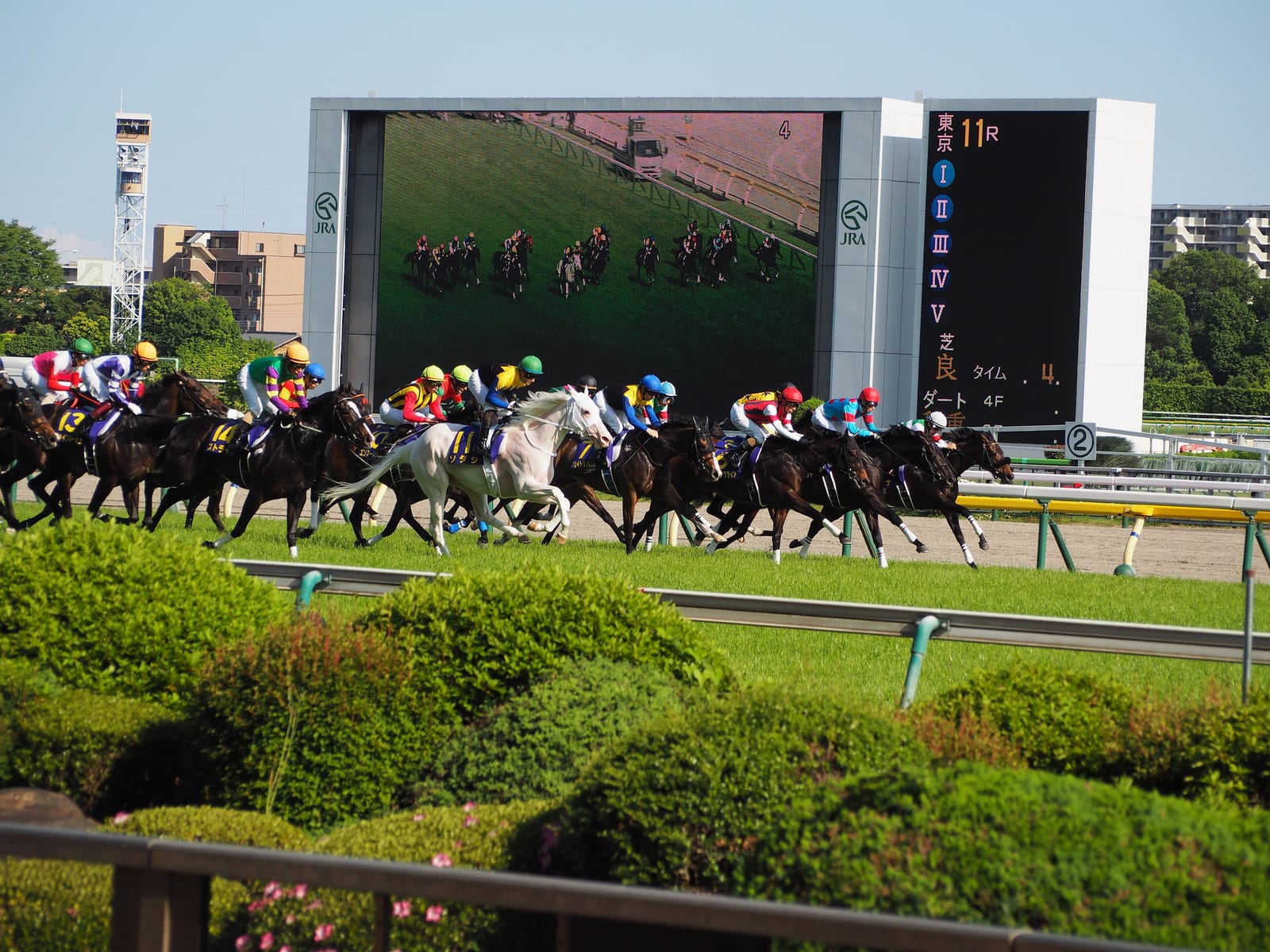
JRA’s beginner guide gives the shape of a normal day:
- Gates open at 9:00 and close at 17:00 (earlier opening on some G1 days).
- About 12 races run from around 10:00 to about 16:30.
- The main race (usually a graded race) is around 15:30, and the last race follows.
- Betting for each race closes 2 minutes before the start.
The two big stands are the Fuji View Stand (フジビュースタンド), the main grandstand facing the finish line, and the Memorial 60 Stand. All tracks have free non-reserved seats and grass areas.
Where to go: a first-visit loop

- Information desk. JRA says you can pick up an English racing program and an English “How to Bet” guide for free at the information desk. Get these first.
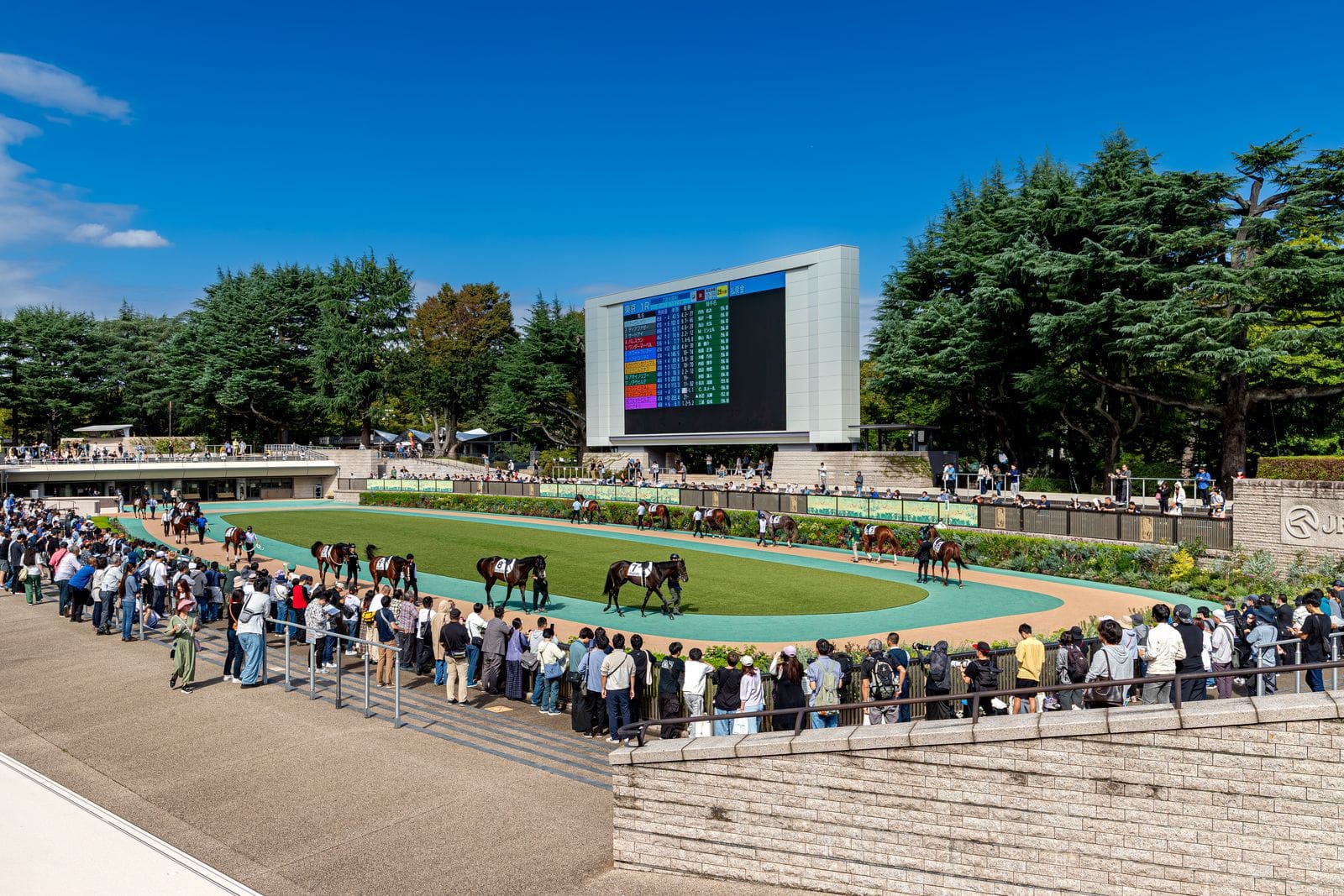
- Paddock (パドック). Before each race the horses walk here. This is the best place to see them up close.
- Horse Preview (ホースプレビュー), Fuji View Stand 1F. On Tokyo race days you can watch jockeys and horses heading out to the track and coming back.
- The finish line. Watch at least one race from the rail in front of the stands. JRA calls its infield screen, 11.2 m high and 66.4 m wide, one of the largest in the world.
- Infield (馬場内). Cross to the infield for the kids’ garden, the food area and a different view of the track.
- JRA Racing Museum. Free, near the East Gate. See our museum guide.
- Japanese garden. Behind the paddock. JRA says it is quiet most of the year and busy in cherry blossom season.
If you want to try a bet, our how to bet at Tokyo Racecourse page explains the machines in English. You must be 20 or older to bet in Japan.
JRA runs a live crowding site for food outlets, betting areas and women’s toilets on Tokyo race days. Open it on your phone at lunchtime.
Practical details
| Need | What JRA says (as of October 2026) |
|---|---|
| Bags | Baggage storage on Fuji View Stand 2F (by the general information desk), 3F (by the central information desk) and Memorial 60 Stand 1F (race days only). They may fill up |
| Cash | The ATMs closed in February 2022. Bring cash for entry and betting |
| Wi-Fi | Free Wi-Fi in many parts of the stands |
| Pets | Not allowed (guide and hearing dogs excepted) |
| Wheelchairs | Wheelchair spaces on Fuji View Stand 4F (first come) and in some reserved areas |
| Photos | No flash where horses are, no tripods, and no live-streaming or commercial use |
For food, see eating at Tokyo Racecourse. With children, see Tokyo Racecourse with kids.
Non-race days
Tokyo Racecourse hosts live racing only during its meetings. On other weekends it often works as a “Park Winds” off-track betting site, showing races from other courses. JRA’s English page says entry is free on those days. Some services, like Horse Preview and some events, run only on Tokyo race days. Check the JRA racing calendar before you go.
Combining with the rest of your trip
Fuchu is on the same Keio Line as Seiseki-sakuragaoka (聖蹟桜ヶ丘), the Whisper of the Heart town, a few stops further west. If you plan several Keio rides in one day, see the Keio one-day pass guide. For a walk before the races, try Okunitama Shrine to the racecourse.
Prices and hours change. Check the official site before you go.
Plan this trip
Sources(checked on October 17, 2026)
- JRA: Tokyo Racecourse location and access (Japanese)
- JRA: How to enter Tokyo Racecourse during the 4th and 5th Tokyo meetings 2026 (Japanese)
- Horse Racing in Japan (JAIRS): Tokyo Racecourse
- Horse Racing in Japan: Guide to Going Racing
- JRA: Tokyo Racecourse main facilities (Japanese)
- JRA: Tokyo Racecourse Q&A (Japanese)